¿SUSTAINABLE? ENOUGH
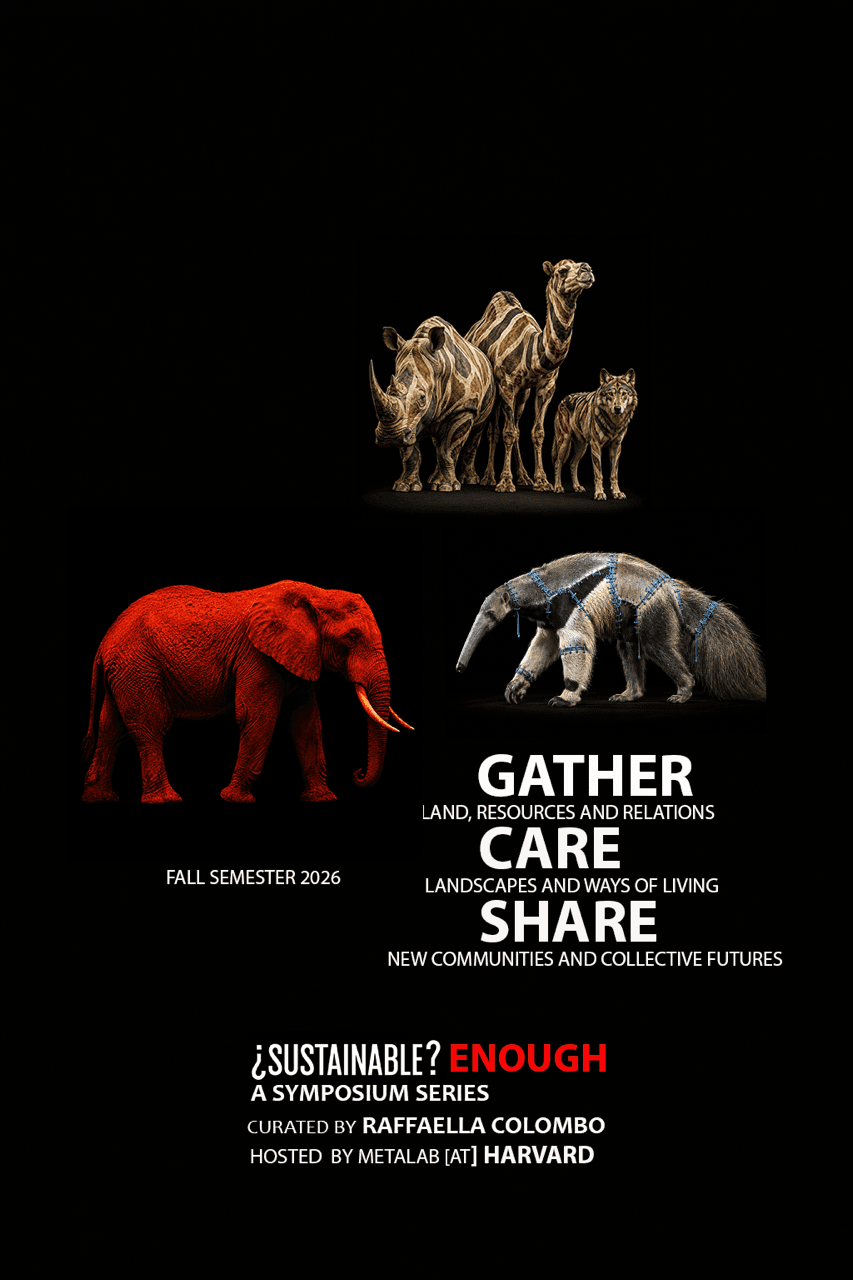
¿SUSTAINABLE? ENOUGH builds on the success of metaLAB’s spring 2026 ¿SUSTAINABLE? symposia. It consists in three symposia: gather, care, and share. Moving across human and more-than-human communities, it explores forms of coexistence, reciprocity, responsibility, and belonging, and considers how more generous collective futures can take shape.- Time
- –
- Location
- online

¿SUSTAINABLE? ENOUGH
Landscapes and Communities
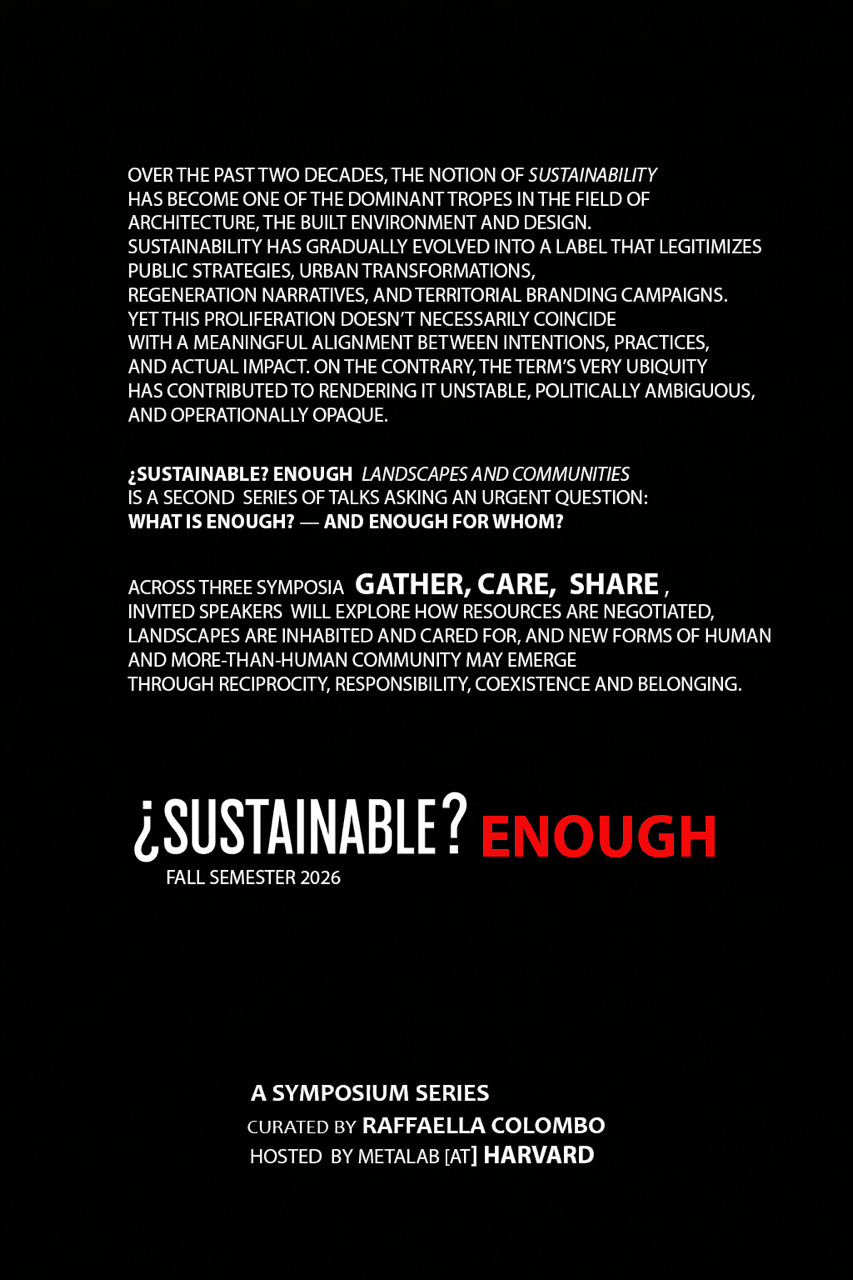
Building on the succes of ¿SUSTAINABLE? which critically interrogated the meanings, contradictions, and claims surrounding sustainability within the architectural field, ¿SUSTAINABLE? ENOUGH narrows its focus to landscapes and communities, posing the follow-up questions: what is enough? and what is enough for whom?
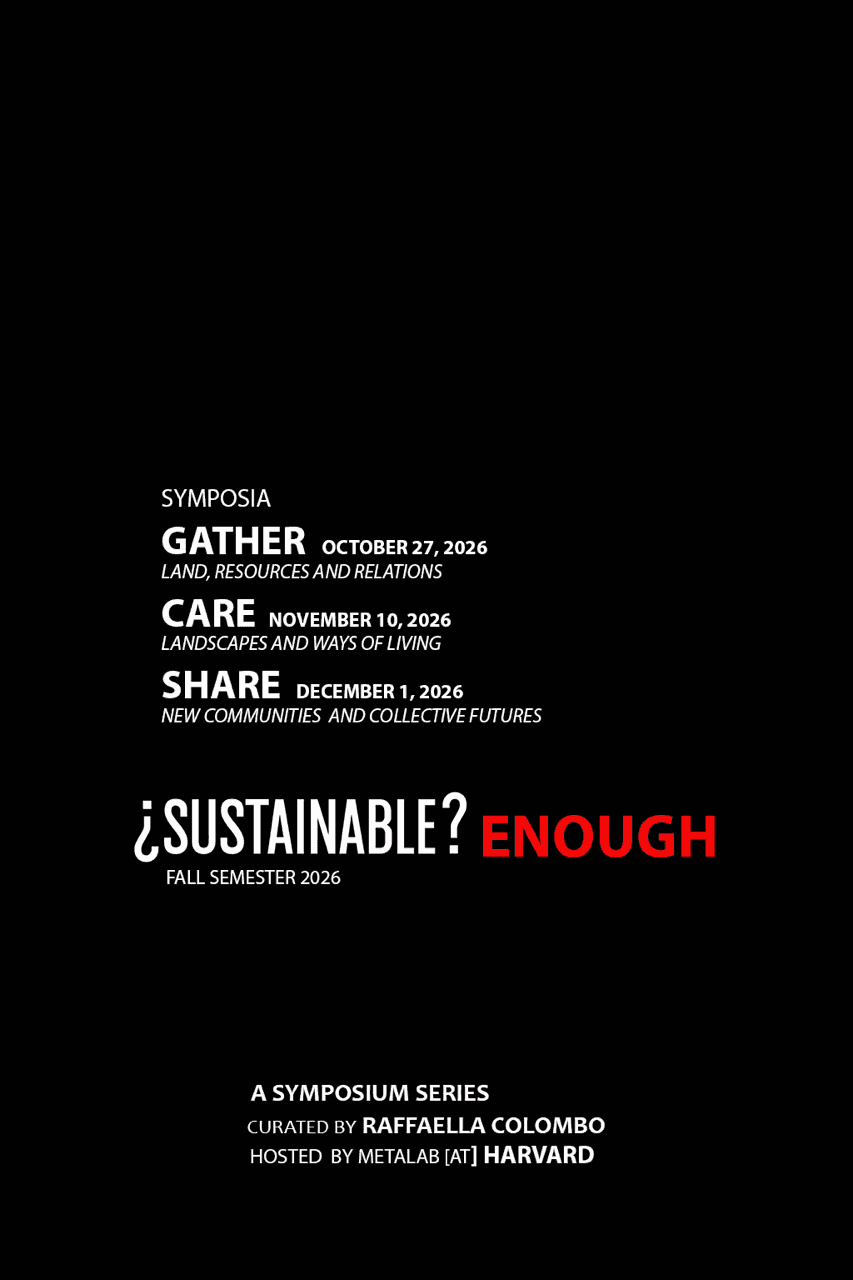
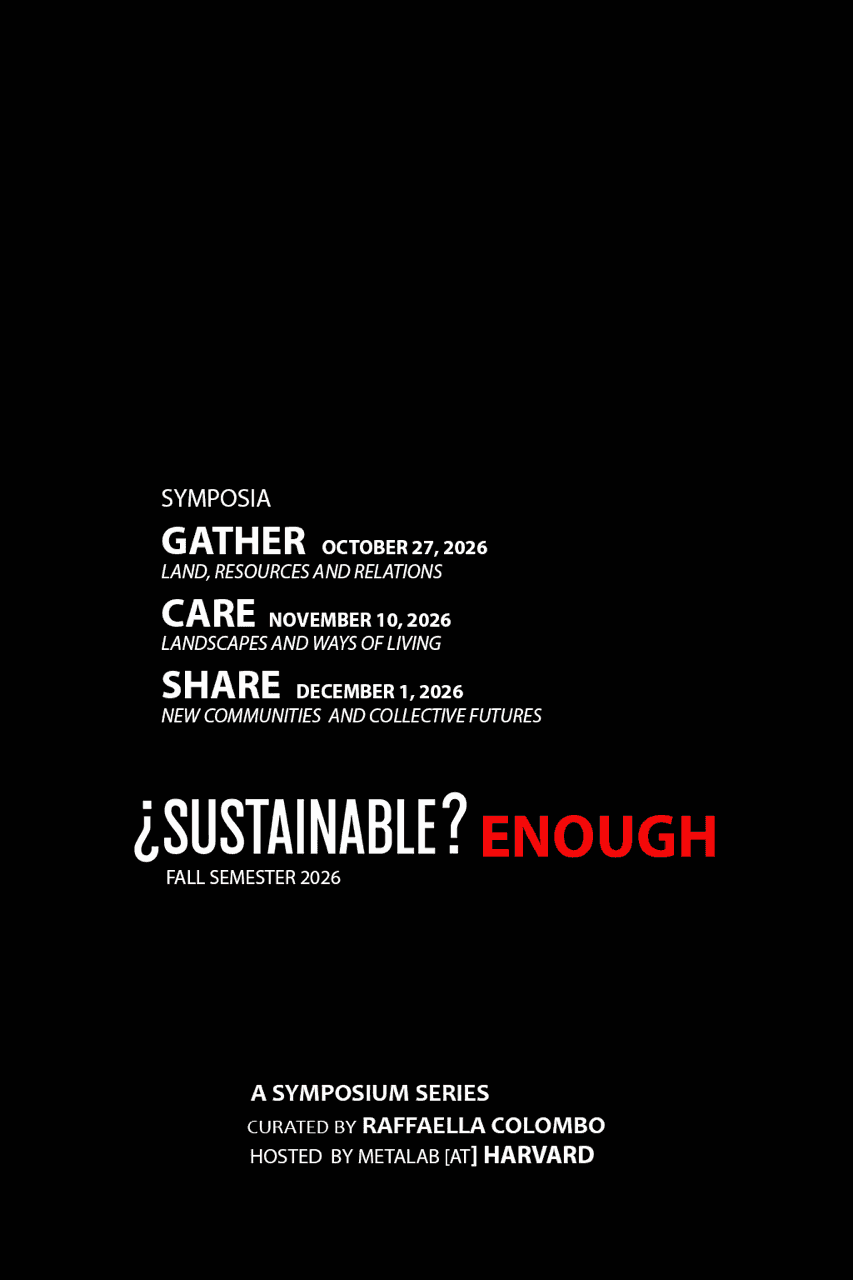
The symposium series is curated and moderated by Raffaella Colombo, visiting researcher at metaLAB (at) Harvard. It is made up of three symposia: gather (land, resources and relations), care (landscapes and ways of living), and share (new communities and collective futures). It consists in a total of 9 talks delivered by 3 guests per symposium, each offering critical perspectives on the challenges of pursuing sustainability in the architectural field. Speaker’s talks will highlight projects, practices, and processes that she/he considers sustainable and unsustainable, which is to say, instances of best and worst practices.
KEY TOPICS
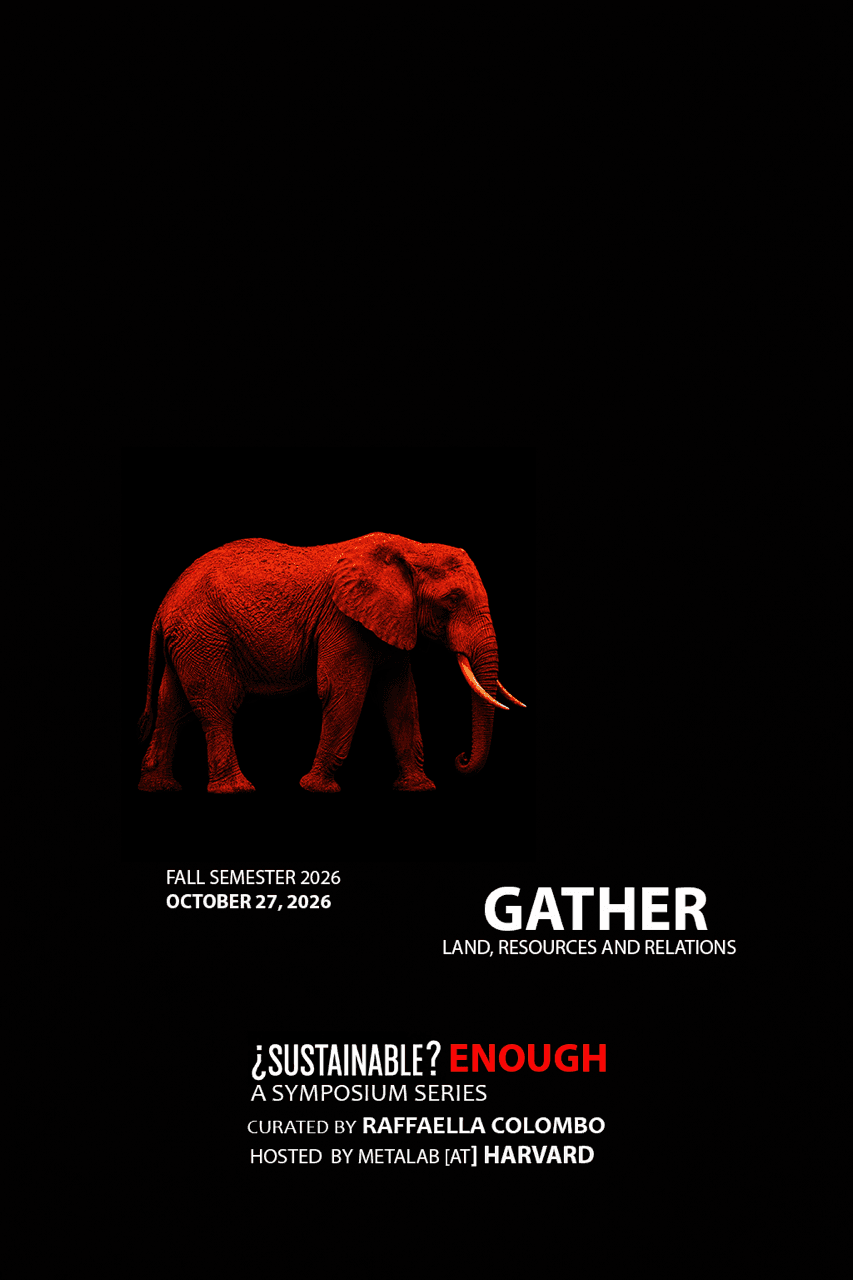
GATHER — Land, Resources and Relations — LAND AS RESOURCE, LAND AS RELATION. LANDSCAPES OF EXTRACTION. WHO OWNS THE LAND? RESOURCE FRONTIERS. CIRCULARITY VS. EXTRACTION. SUPPLY-CHAIN OPACITY. SCARCITY AND ABUNDANCE. FOOD, SOIL, AND TERRITORY. THE POLITICS OF HARVESTING. LAND VALUES AND LAND VALUE. COMMON RESOURCES, CONTESTED TERRITORIES. INDIGENOUS LAND RELATIONS. WHO BENEFITS FROM “GREEN” EXTRACTION? NATURE-BASED OR NATURE-EXTRACTIVE? THE LIMITS OF TAKING.
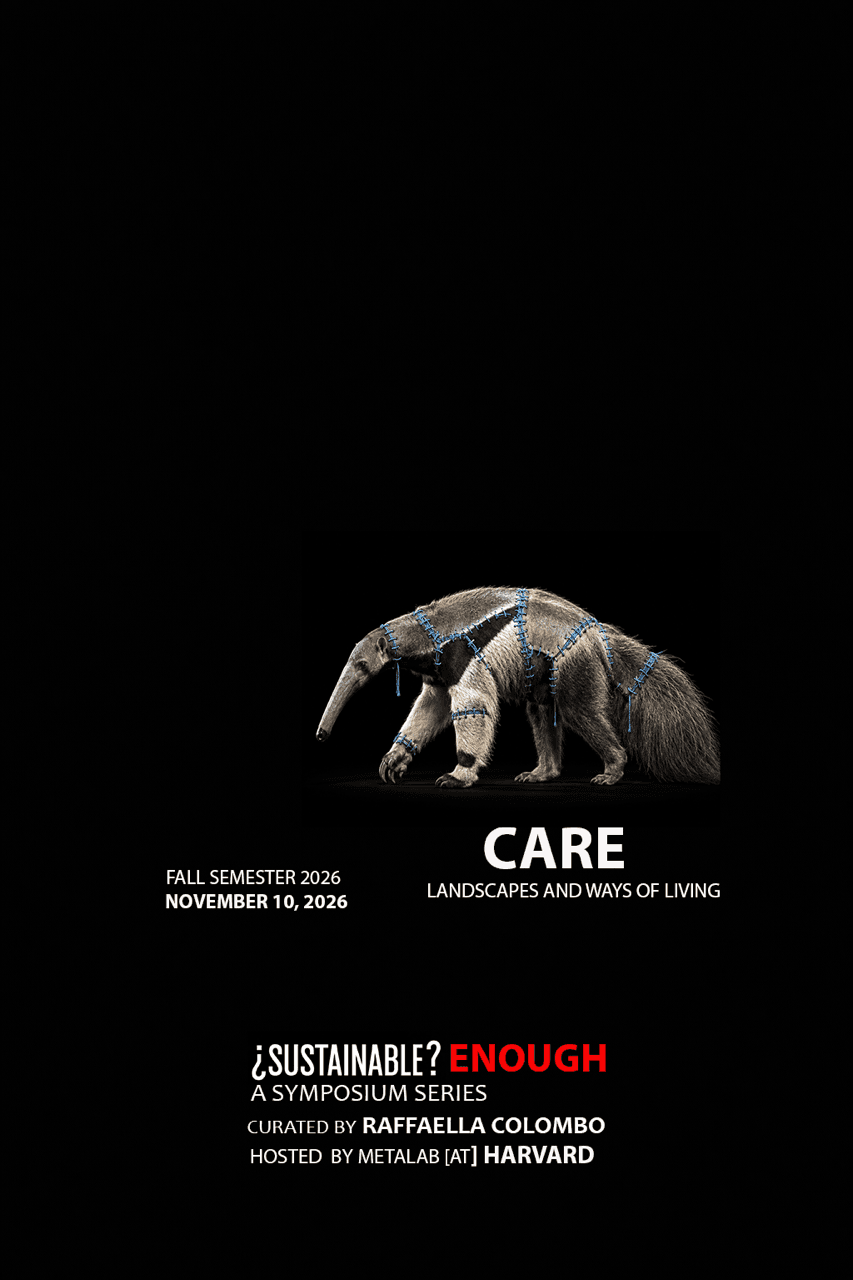
CARE — Landscapes and Ways of Living — MAINTENANCE AS DESIGN. CARE BEFORE INNOVATION. REPAIR, REUSE, ADAPT. LANDSCAPES OF EVERYDAY LIFE. WAYS OF LIVING WITH CHANGE. DESIGNING LESS, LEAVING MORE. THE VALUE OF THE EXISTING. WHO CARES FOR THE LANDSCAPE? STEWARDSHIP AND LONG-TERM RESPONSIBILITY. BEYOND HUMAN-CENTERED DESIGN. MORE-THAN-HUMAN HABITATS. THE POLITICS OF PLANTING. REWILDING OR REDESIGNING? CLIMATE ADAPTATION AS A WAY OF LIFE. MAINTENANCE, NEGLECT, AND INVISIBLE LABOR. HERITAGE AS A LIVING PRACTICE. LANDSCAPES THAT CHANGE WITHOUT US. WHEN IS NON-INTERVENTION A DESIGN ACT? HOW MUCH DESIGN IS ENOUGH?
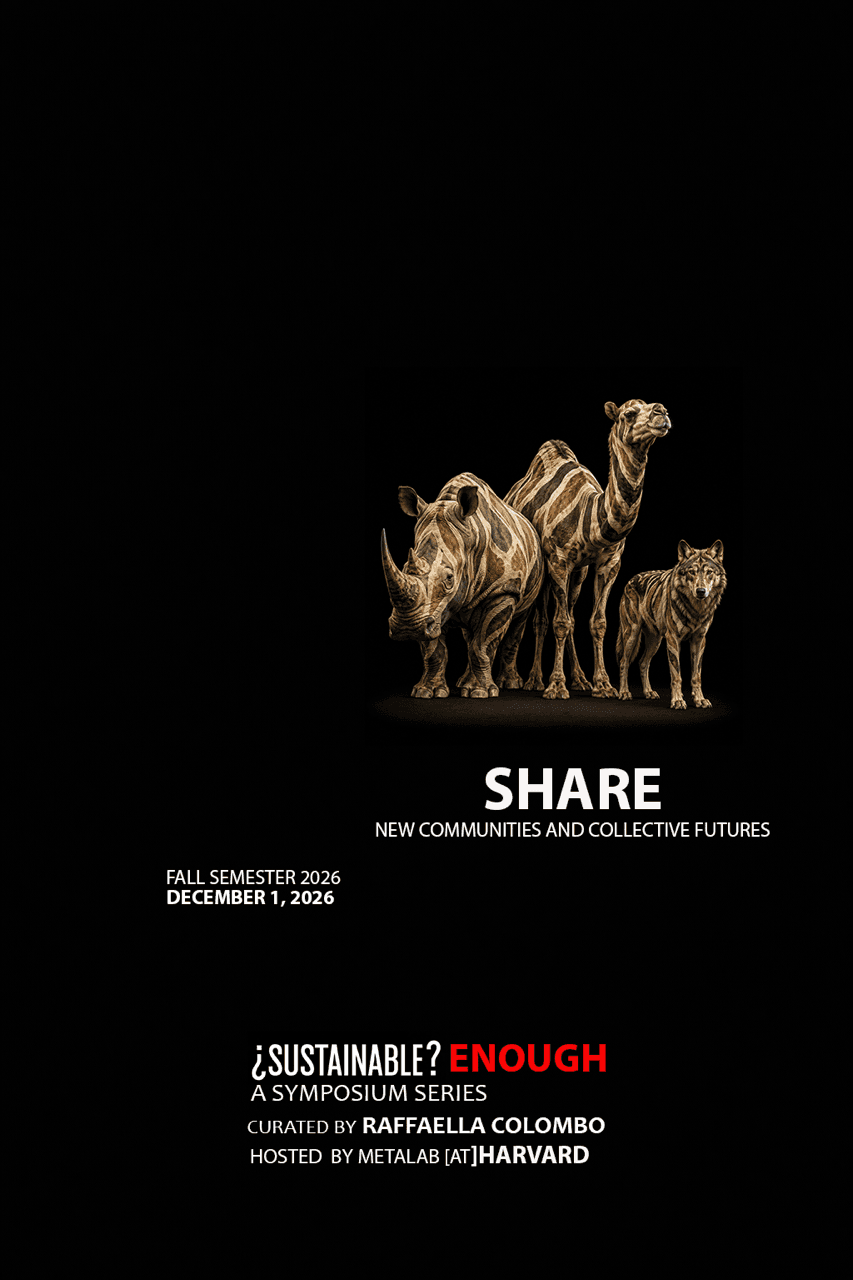
SHARE — New Communities and Collective Futures — WHO GETS ENOUGH? NEW FORMS OF COMMUNITY. THE COMMONS AND THE COMMON GOOD. COLLECTIVE OWNERSHIP. SHARING LAND, SPACE, AND RESOURCES. HOUSING AS A COMMON QUESTION. PUBLIC SPACE, PRIVATE INTEREST. DISTRIBUTIVE EQUITY. SOCIAL JUSTICE AS SUSTAINABILITY. GREEN GENTRIFICATION. WHO GETS TO BELONG? MIGRATION AND NEW FORMS OF BELONGING. COMMUNITY WITHOUT CONSENSUS. “PLANNING” COMMUNITIES? PARTICIPATION OR POWER-SHARING? COLLECTIVE CARE AND MUTUAL SUPPORT. FROM NET-ZERO TO NET-JUST. WHO DECIDES THE COLLECTIVE FUTURE? MORE-THAN-HUMAN COMMUNITIES
¿SUSTAINABLE? ENOUGH seeks to develop a precise theoretical vocabulary and framework for reframing public discussions of sustainability and bringing students, scholars, scientists, architects, and designers into serious, sustained critical conversation. Rather than treating sustainability as a self-evident virtue, it understands it as a field of negotiation: one in which questions of limits, responsibility, access, care, and coexistence remain open to scrutiny. Critically interrogating the field’s contradictions does not diminish the urgency of sustainability; on the contrary, it reasserts its importance on the global stage and lays a more rigorous foundation for future debate.